
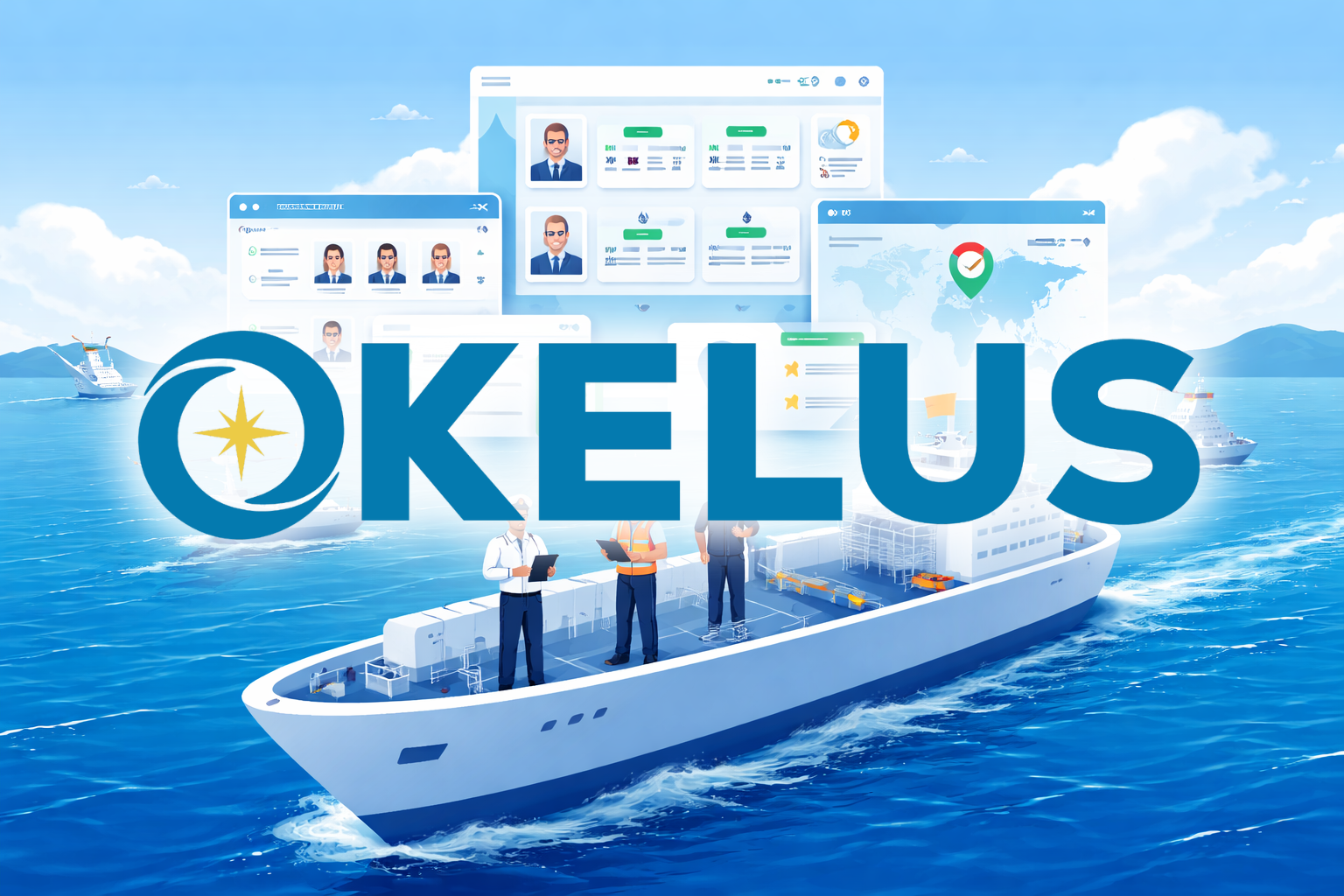
Crew management can no longer be handled effectively through fragmented tools, manual updates, and information spread across emails, spreadsheets, and shared folders. As long as operations remain relatively simple, that kind of setup may appear manageable. The problem begins when fleets grow, rotations become more frequent, availability changes at short notice, document checks pile up, and teams need to coordinate compliance, travel, training, and operational readiness with much greater precision. At that point, the crewing department can easily shift from structured coordination into constant firefighting, with time being spent on manual control rather than strategic execution.
That is exactly where crew management software changes the game. It does much more than digitize existing records. It brings structure to processes that quickly become fragile without a clear operational framework. A well-designed system helps centralize information, reduce unnecessary handoffs, make workflows easier to follow, and give teams a shared view of crew profiles, documents, open actions, and upcoming rotations. In a sector like shipping, where even a small gap in coordination can create operational consequences, that difference is far from marginal.
Why crew management is more complex today
Modern crew management involves far more than simply knowing who is available and when the next joining date is scheduled. Shipping companies need to monitor documents, certificates, medical validity, service history, travel requirements, relief timelines, open actions, and each seafarer’s suitability for a given operational context. All of these elements influence one another. If one piece of information is incomplete or outdated, the entire process can slow down. That is why many companies struggle not because they lack experienced people, but because they do not have a system robust enough to support the pace and complexity of real-world operations.
When information sits across multiple tools, each department ends up working from a partial version of the same reality. The crewing team sees one availability status, document control sees another, travel is waiting for confirmation, and operations may already be working with timelines that have changed. The result is an organization that spends more time reacting than actually managing. In an already demanding industry like maritime operations, that way of working does not just slow things down. It materially increases the risk of mistakes. A well-built crew management platform solves this by giving every operational stakeholder access to the same reliable source of truth.
What crew management software really is
Many companies use digital tools to store crew information, but that does not automatically mean they are using a true crew management system. A neatly organized archive is useful, but it is not enough. A shared spreadsheet may be convenient, but it does not run a process. Real crew management software is a purpose-built platform designed to connect operational data, actions, and decision-making within one environment. That means managing crew profiles, sea service history, certificates, documents, rotations, readiness, travel, and follow-up activities without having to jump between systems just to rebuild the bigger picture.
The real difference is that the software does not simply store information. It connects it. It links the seafarer’s profile to the supporting documentation, connects documentation to readiness, ties readiness to rotations, and aligns rotations with operational coordination. That gives the team a clear and immediate view of what is happening, instead of forcing people to chase scattered data across multiple channels. It is the difference between managing by fragments and managing through a structured system. For a shipping company, that means less daily friction and far more control over fast-moving decisions.
The limits of Excel, email, and manual follow-up
Excel is a useful tool, and in many environments it still has a valid place. The problem starts when it becomes the foundation of the entire crew management process. At that point, the cracks begin to show. Different versions of the same file, unsynchronized updates, key information buried in inboxes, notes written outside of context, expiry dates tracked manually, and tasks that depend on someone’s memory rather than on a system. None of that just creates delays. It makes the entire process more fragile and more exposed to inconsistency.
The biggest issue is that teams end up spending valuable energy on tasks that add no real value. Searching for documents, checking which file is the latest version, reconstructing the status of a case, chasing confirmations that were already given elsewhere, or repeating checks because nobody has a full view of the process. These are all small frictions that, once combined, slow the entire organization down. A solid crew management software platform helps remove exactly that kind of hidden operational drag. It does not eliminate the complexity of shipping, but it gives companies a far better structure to absorb that complexity and stay in control.
The capabilities that matter most
When evaluating a crew management platform, the number of features matters far less than the way those features work together. The areas that truly make a difference are clear: crew profile management, sea service history, certificate and document tracking, rotation planning, readiness monitoring, travel management, open action follow-up, dashboards, and reporting. If those functions exist but remain disconnected, the benefit is limited. If they operate within the same workflow, however, the team gains much greater continuity, visibility, and efficiency.
That is where the real value of a vertical platform becomes obvious. Shipping companies do not need a collection of separate modules living in isolation. They need a system where each action updates the broader operational context. When crew profiles, document status, readiness, and rotations all live in the same environment, work becomes easier to interpret, priorities become clearer, and teams no longer have to rebuild information manually every time a decision needs to be made. In a fast-moving operational setting, that kind of continuity is not a nice-to-have. It is what makes crew management more resilient.
| Area | Fragmented approach | With Okelus |
|---|---|---|
| Rotations | Planning spread across files, emails, and manual confirmations | Better visibility on availability and fewer redundant handoffs |
| Documents and certificates | Expiry dates tracked manually, with higher risk of oversight | Centralized control and clearer readiness visibility |
| Travel and crew change | Coordination scattered across departments and providers | A smoother workflow between planning, travel, and joining |
| Compliance | Slow checks and limited visibility during verification | Stronger traceability and more reliable document control |
| Reporting | Data rebuilt manually with limited operational visibility | Clearer dashboards and reporting for teams and management |
Why document control and operational readiness matter so much
In crew management, it is not enough to know who is available. You need to know who is actually ready to operate. That means having control not just over planning, but over the quality and validity of the information behind that planning. Documents, certificates, medical status, internal requirements, and follow-up actions all need to be part of the same flow. When these elements are handled separately, organizations often become aware of problems too late, usually when the operational window is already close and flexibility has disappeared.
A platform like Okelus helps address exactly this challenge by connecting document control and operational readiness. In practical terms, teams get a clearer view of each seafarer’s true operational status, can identify readiness gaps earlier, and can coordinate the required follow-up actions with much greater precision. The benefit is not only a reduction in manual work, but an improvement in the quality of control itself. When teams can see what is missing before it turns into an issue, they can act earlier and with much less pressure. In day-to-day operations, that makes a very real difference.
Travel management: where planning meets reality
In daily operations, a seafarer’s journey is not a secondary detail. It is the point where planning meets reality. Flights, hotels, visas, joining and sign-off timing, coordination with agents and service providers — all of it needs to align with the scheduled rotation. If travel and crew planning remain disconnected, delays, overlaps, and a long chain of manual checks become almost inevitable. That is why travel management should never be treated as an optional extra inside a crew management platform.
When travel is integrated into the operational workflow, coordination becomes much smoother. Information no longer has to be chased from one department to another. It can be viewed and managed within the same context. Okelus follows that logic by linking travel management with planning and readiness. That makes it easier to maintain consistency between what is scheduled and what is actually happening, which immediately improves operational control. In a dynamic maritime environment, that continuity reduces friction and gives teams more capacity to absorb unexpected changes without losing visibility.
The role of artificial intelligence in crew management
Artificial intelligence is often discussed in broad, generic terms, but in crew management it only becomes valuable when it understands the operational context it is working within. If it cannot read document status, open actions, readiness, rotations, and the team’s real priorities, it remains an interesting feature rather than a useful one. Its value emerges when it helps teams move faster through follow-ups, deadlines, alerts, and outstanding actions without forcing people to manually rebuild the context each time.
That is the direction taken by OkelusAI, which brings AI into the actual context of maritime crew management. Not as a novelty feature, but as operational support. If the system can surface priority actions, readiness gaps, expiring documents, and key contextual information for the team, then the technology starts to make a practical impact on daily work. In an environment where speed and accuracy are part of service quality, that kind of support can significantly reduce operational pressure.
Why a vertical platform matters more than a generic solution
Many software platforms promise document management, workflows, reporting, and resource organization. The point is that in the maritime industry, the real value does not lie in being generic. It lies in matching the process. A vertical platform understands the importance of rotations, the weight of documentation, the role of readiness, the meaning of service history, the sensitivity of crew changes, and the constant coordination required between shore teams and vessels. That fit makes the system more intuitive to use and more valuable from day one, because it does not force teams to invent workarounds just to make the tool match reality.
This is exactly where Okelus positions itself. Not as a general-purpose management system that has been adapted later, but as a platform built around the real workflows of maritime crew management. That approach is reflected in the way planning, document control, readiness, travel, reporting, and AI all work within the same environment. When the technology is designed for the right operational context from the start, teams stop wasting time compensating for the limits of the system and can focus on what actually matters: making better decisions, improving coordination across departments, and maintaining operational continuity even in more demanding scenarios.
Conclusion
Today, crew management software is no longer just a tool for organizing crew information. It has become an operational lever that directly affects control, coordination, execution quality, and continuity of work. When rotations, documents, readiness, travel, and compliance are handled in separate environments, organizations become slower, more fragmented, and more exposed to risk. When those elements live within the same system, teams work with greater clarity and management gains a much stronger view of what is really happening across operations.
Okelus addresses that need with a platform built specifically for the maritime sector, designed to centralize crew profiles, improve document control, support operational readiness, streamline travel management, and give decision-makers greater visibility every day. For companies looking to reduce fragmentation and move toward a more consistent operating model, the real goal is not simply to digitize. It is to build a crew management process that is more reliable, more transparent, and better suited to the realities of modern shipping.