
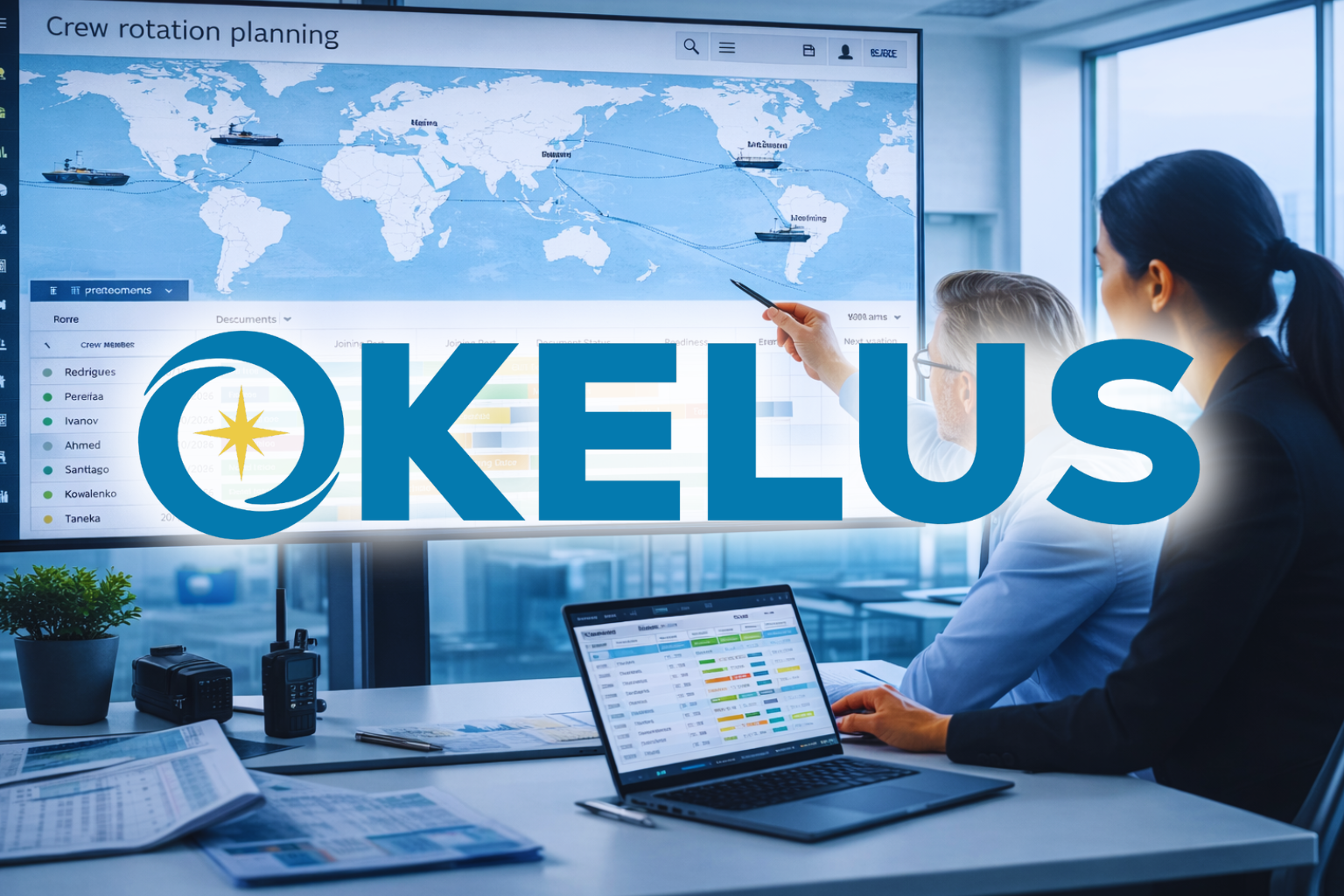
Last-minute crew changes rarely happen because of one single mistake. More often, they come from a fragile process. An outdated Excel file, a joining date changed too late, a certificate discovered at the last minute, or a travel plan that is no longer aligned. When these issues add up, the team stops planning and starts reacting.
That is why managing rotations through separate tools is no longer enough. Teams need one system that keeps planning, readiness, documents, travel, and cross-team coordination connected. In this context, a good crew rotation planning software helps reduce errors, delays, and dependence on manual checks.
Why Crew Rotation Planning Breaks Down
Many processes break because information lives in too many places. Planning sits in Excel. Exceptions move through email. ETAs change elsewhere. Meanwhile, compliance and operations work with updates that are not always synchronized. As a result, no one sees the full picture at the same time.
The problem becomes more serious when port calls change or when document readiness is not visible early enough. An expiring medical, a missing visa, or a certificate that has not been renewed can block a joining that was already planned. At that point, the crew change becomes urgent, expensive, and much harder to coordinate.
In addition, when travel and rotation planning are not connected, every update creates new manual work. The team must recheck dates, availability, compliance, and logistics across multiple tools. As a result, crew change planning loses continuity exactly when the team needs more control.
5 Signs Your Process Is Too Fragile
The first sign is simple: crew changes are organized at the last minute too often. This means the process is not anticipating risks early enough.
The second sign is discovering certificates, medicals, and documents too late. When the team sees readiness gaps only close to the joining date, the operating margin disappears immediately.
The third sign is travel that is no longer aligned with the joining date. Flights, transfers, and availability may look confirmed, but real readiness is still unclear.
The fourth sign is poor shared visibility between crewing, HR, compliance, and fleet operations. When each team reads a different version of the same situation, decisions slow down.
The fifth sign is dependency on one single person. If the process lives inside someone’s memory, then the system is still fragile. A real maritime crew scheduling workflow should live in the platform, not in personal reminders.
What Good Crew Rotation Planning Software Should Actually Do
A strong system should first centralize crew records. Profiles, history, contracts, availability, operational notes, and documents should exist in the same context. This allows the team to work from one reliable source of truth.
Second, the software should provide clear and timely document alerts. Expiries, renewals, and readiness gaps should appear before they become urgent problems. This is essential for improving crew document compliance without increasing manual effort.
It should also include a travel workflow connected to the rotation plan. If a joining date changes, the team should immediately understand the impact on flights, transfers, and open actions. At the same time, compliance visibility, reporting, and decision history should be part of the same environment. Without these elements, software may store data, but it does not truly manage the process.
For many shipping companies, the real improvement starts when crew records, operational workflows, and document control come together in one environment. This is where a platform like Okelus helps centralize data, processes, and operational coordination inside one system.
Why Live Vessel Visibility Changes Everything
Live vessel visibility improves planning because it connects ETA, port calls, and crew changes inside the same operational workflow. This means the team is no longer planning on outdated assumptions, but on a more current situation.
As a result, timing mistakes decrease and coordination between office teams improves. Crewing, marine HR, compliance, and operations can read the same context. Therefore, decisions become faster and more consistent.
When a vessel changes schedule, the impact on the rotation should become visible immediately. Only then can the team reorganize priorities, readiness, and travel without losing control. This is why operational visibility makes the difference between a process that reacts late and one that adapts better.
How AI Can Support Planning
AI can support planning in a practical way. For example, it can create quick summaries of open rotations, highlight operational priorities, and answer contextual questions about crew and readiness.
This helps the team understand faster who is ready, what is missing, and which actions need follow-up. As a result, repetitive checks decrease and operational speed improves. When artificial intelligence works inside a real maritime context, the support becomes much more useful.
In this context, OkelusAI helps crewing, HR, compliance, and operations get faster answers, operational summaries, and clearer priorities inside the same working environment.
Final Checklist for Choosing the Right Platform
Before choosing a solution, verify these practical criteria:
| ✓ | Centralized crew records |
| ✓ | Automatic alerts for certificates, medicals, and documents |
| ✓ | Travel workflow connected to joining dates |
| ✓ | Shared visibility across crewing, HR, compliance, and operations |
| ✓ | Connection between vessel ETA, port calls, and crew changes |
| ✓ | Clear operational reporting |
| ✓ | Tracked decision history and follow-ups |
| ✓ | Well-defined roles and permissions |
| ✓ | AI support for summaries and priorities |
| ✓ | Reliable infrastructure built for the industry |
If a platform does not cover these points, the risk remains high. It may organize part of the work, but it will not truly strengthen the process. By contrast, a solution built for the maritime sector can improve planning, coordination, and operational continuity. In this respect, pages such as marine HR software and crew document management help show how these workflows connect.
Conclusion
Reducing last-minute crew changes in 2026 means reducing fragmentation. When planning, documents, compliance, travel, and operational visibility live in the same system, the team works with more continuity and fewer urgent disruptions.
A good crew rotation planning software does more than plan rotations. It gives crewing, marine HR, fleet operations, and compliance teams greater control over daily work. That is exactly what makes the process more stable, more readable, and less dependent on last-minute decisions.
See how Okelus helps your team plan rotations, track document readiness, and coordinate crew changes with greater control. Request a demo.